
How to create an entrance & make a great first impression
Spruce up your drive, front door and hallway to clinch the deal
There’s no second chance to make a good first impression. From the moment would-be buyers pull up outside, they’re already forming opinions. “A property will sell itself within two to three minutes of someone walking through the front door,” says Paul Preen, director of Lang Town and Country estate agents. “Many people know before they even step inside simply from the kerbside view. First impressions are massively important.” That’s why it pays to give your entrance – the driveway, front door and hallway – extra attention.
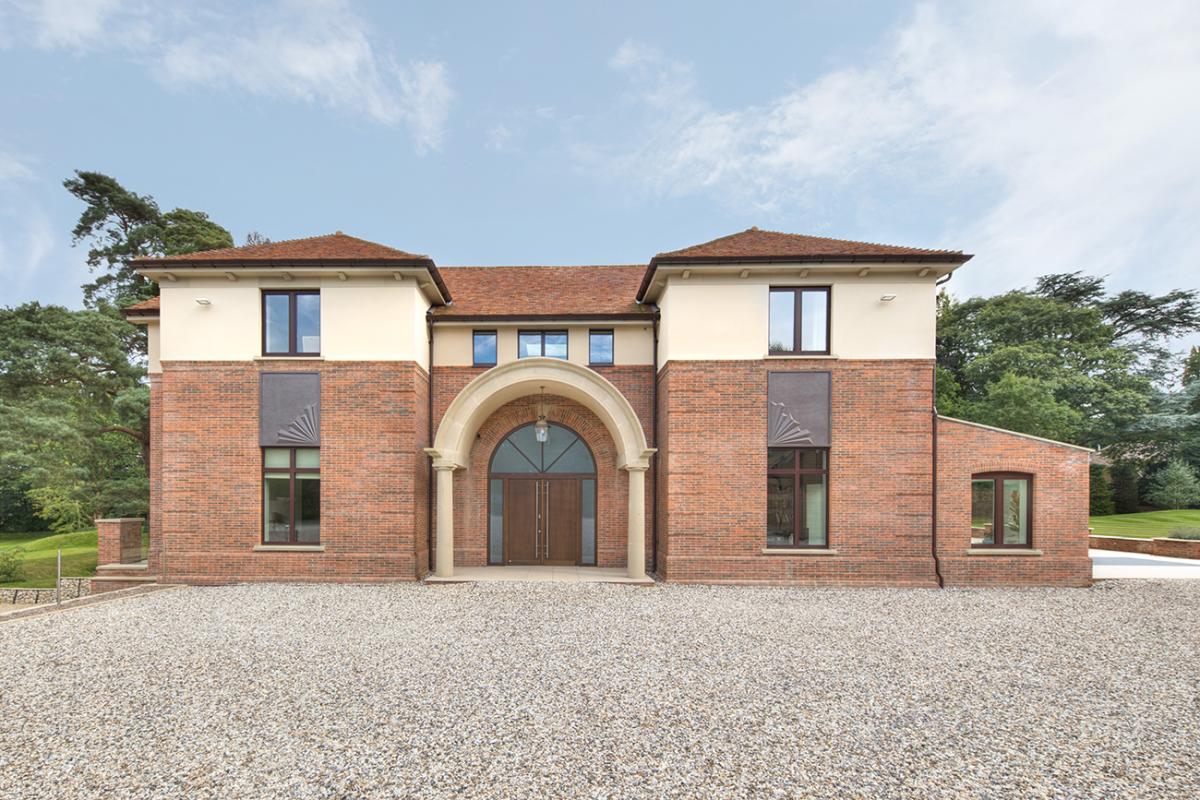
New country house designed by architect Scot Masker, photographer Martin Gardner
Driving anticipation
A well-designed driveway doesn’t just provide parking - it frames the property and creates a sense of arrival. Interior designer Rebecca Loughran, founder of Hub Works, explains: “If you can create a driveway that is set back from the street, that’s ideal. The longer the drive, the better and tree-lined is best.” On a recent visit to a country estate, she spent 35 minutes driving through parkland to reach the front door. “It was absolutely incredible,” she says. While that’s an extreme example, security and privacy are among the first things homeowners consider, Loughran adds. “That’s why traditional estates often had gatehouses and lodges at the entrance, to provide security on site,” says the interior designer.
It’s not just grand estates that benefit from a thoughtfully designed driveway. Off-street parking is a premium feature and for some buyers it can be a make-or-break factor. Where a driveway doesn’t already exist, converting the front garden into a parking space is a common solution. Tom Bennett, senior property agent and valuer at Hamwic estate agents in the New Forest, says: “A sweeping driveway with open spaces rather than shrubs and flowerbeds is ideal. From our point of view, the more parking space, the better.”
Resin and block paving are among the most popular finishes for their durability and kerb appeal. Many homeowners continue these materials around the sides and rear of the home to create additional parking, adds Bennett. Preen agrees: “Parking is paramount.”
But Loughran advises caution. “It can spoil a really beautiful house if the front starts looking like a car park,” she warns. “Ideally, the driveway leads to the front door for unloading and then the cars are parked to the side or rear.” Because many new developments maximise living space, private drives are becoming rarer and therefore a selling point. As Preen points out many new-builds rely on allocated spaces or on-street parking, making a private drive a luxury.
Front doors: size (and materials) matter
Bigger isn’t always better. “The front door needs to be in proportion with the house,” says Loughran. If it’s a double-fronted house, a large door works. But on a small property, an oversized door looks silly.” Even multi-million pound London townhouses often have modestly sized but perfectly proportioned entrances. “It’s all about scale,” she adds.
Materials also make a strong first impression. Oak remains a classic choice for a front door: timeless, durable and naturally beautiful. Both Loughran and Bennett also recommend composite front doors, made from a mix of materials – often a solid timber core, polyurethane foam and a tough outer skin like glass reinforced plastic or uPVC. This robust multi-layered construction provides excellent security, weather resistance and low maintenance. Plus, they are available in both traditional and contemporary designs.
Glazed side panels or a transom window (above the door) can flood the hallway with light. “I’m a massive fan of getting light in everywhere,” says Loughran. ” whether through side lights, a transom window or even a fully glazed gable. Stained glass adds colour while sandblasted glass provides a softly diffused light.
A brand-new front door isn’t always necessary. Preen points out a quick refresh can work wonders. “If a wooden door needs freshening up, give it a lick of paint. Make sure the windows and guttering are clean and don’t leave letterboxes hanging off – it gives the impression the property has been neglected.”
Even small upgrades can make a difference. A new handle, knocker or letterbox can spruce up an existing door. High-quality hardware, such as solid brass or stainless steel, lasts longer than cheaper chrome-plated fittings.
The hall sets the scene
If you’re building or renovating, it’s a chance to create a generous hallway. One client of Loughran’s removed a first-floor bedroom to create dramatic double-height spaces in the hallway and reception room. “They increased the ceiling height from 2.8 metres to 4 metres,” she says.
Height and light in a hallway can transform an entrance. Bennett recalls the hallway in one property had a vaulted ceiling and glass gable window above the front door, features that instantly lifted the entire home. Mirrors are another simple way to increase brightness and give the illusion of space.
Smaller hallways, however, need not be neutral or white. Loughran advises embracing bold decor: deep greens, a dado rail, or patterned wallpaper that sparks joy the moment you enter. She says neutrals often fall flat: “You don’t want a bland hallway but something with personality.” Just keep scale in mind. “There’s no point in putting a massive artwork in a small house, you won’t be able to stand back enough to appreciate it.” For smaller halls, she suggests a gallery of pictures up the stairs instead.
Storage is essential, especially when the hall is the main entrance. Shoes, coats and bags need a home. Bennett agrees, saying families especially appreciate a space where kids can drop schoolbags and shed muddy shoes before heading to the living room.
Large hallways offer wonderful opportunities. Sweeping“Gone with the Wind” staircases, oversized pendant lights, a polished round table with a dramatic flower arrangement, chaise longues or even grand pianos. Everything needs to be on a bigger scale – and well lit.
Preen emphasises the basics: keeping hallways clean, clutter-free and smelling nice. A subtle scent, not overpowering, can help create a good first impression. He’s seen homes with “hideous” décor still make a sale because someone fell in love with the feeling of the place. For sellers, this means you don’t have to invest heavily in décor.
Bennett sums it up: the hallway should signal what’s to come. “If a house has a grand open hallway with a galleried landing, it creates that wow factor. The first room sets the tone for the rest of the home.”