
How to win planning permission on unlikely sites
Read our top tips
It’s not easy to find a plot to build your dream home. Under the planning control system, a large percentage of land can’t be developed. And areas earmarked for development by local councils are quickly snapped up by major housebuilders. Despite a shortage of individual plots for self-builders, new ways are still being found to gain approval. This is because the Government keeps changing the planning goalposts, so applications that would have been refused a few years ago, might get the thumbs up today.
Barns and agricultural buildings
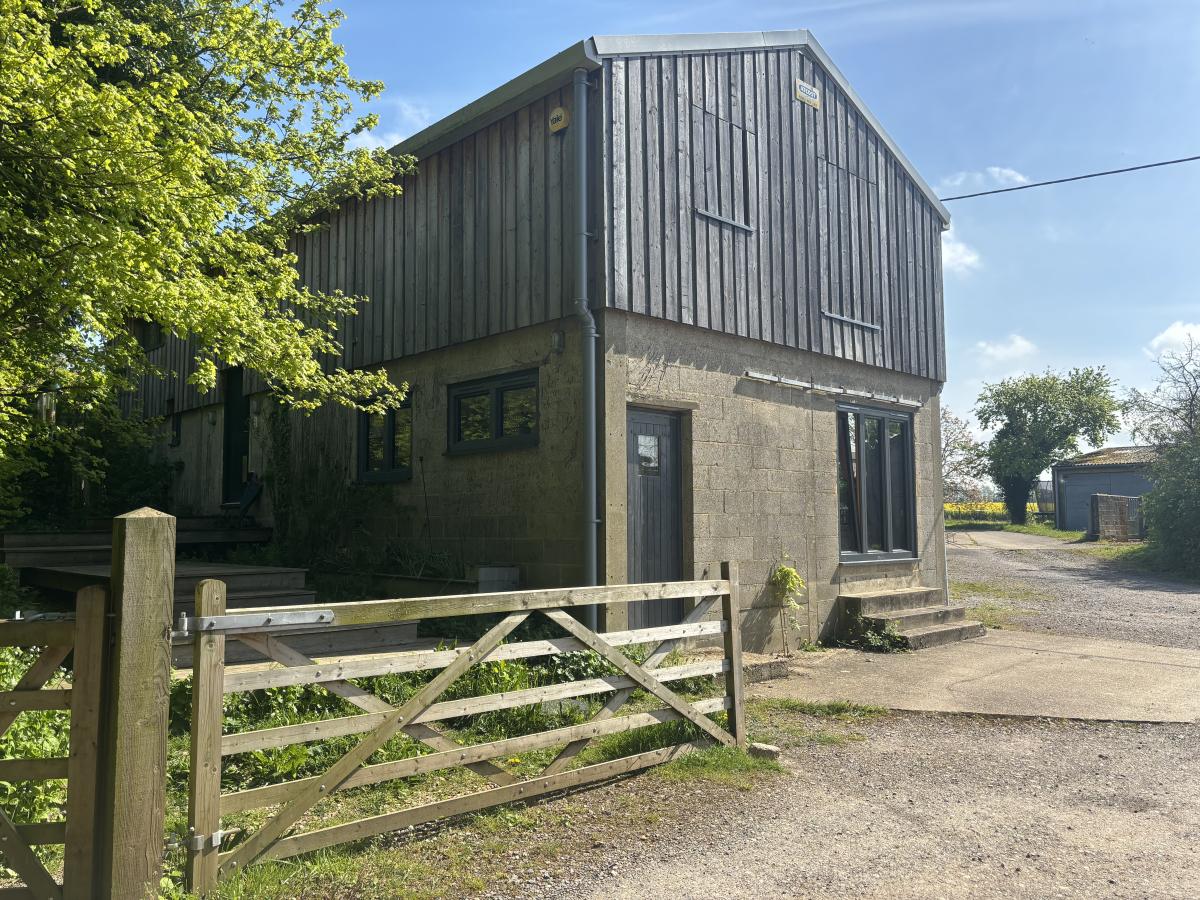
Class Q of the Town and Country Planning Act allows landowners and self-builders to convert former agricultural buildings into up to five homes without the need to apply for planning permission. Reasonable modifications are permitted, including changes to windows, doors, roofing and exterior walls. This permitted development was introduced in 2014 to reduce the amount of red tape required and allow homes in rural areas to be built more easily.
A useful example, see above, is the conversion of a former dairy by architect Scot Masker into a family home which was decreed to be permitted development under Class Q by Winchester City Council. This project involved the conversion of a concrete frame building into a three-bedroom dwelling by retaining the existing structural framework, partly cladding the exterior in timber, adding windows and a new insulated tin roof.
Class Q doesn’t allow the complete demolition and rebuilding of barns – only partial demolition in specific conditions. Development needs to keep within the footprint of the existing building which can’t be listed. Building a new house in the countryside is notoriously difficult with tough planning hurdles to overcome. Class Q provides a pathway for barn conversion projects without having to submit a full planning application. It also offers a lower upfront cost. Local planning authorities often request that a structural survey is submitted with the application to ensure the building is structurally sound. This serves as a good starting point to demonstrate the agricultural building is capable of conversion. Councils will also assess the external appearance of the new design and whether the location or siting makes it impractical or undesirable.
Demolish and replace
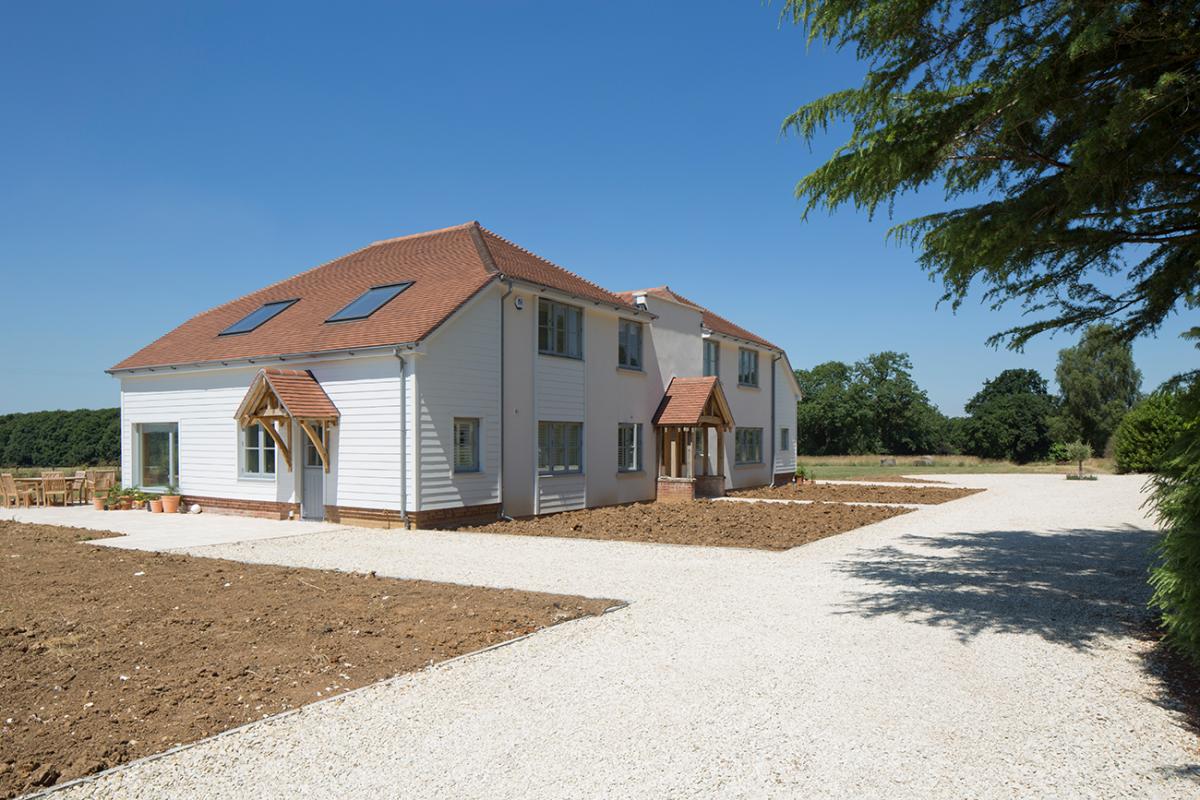
Image supplied by Masker Architects. Photographer Richard Chivers
A popular way of finding a self-build plot is to buy an existing property and replace it with a larger one. This is why small, shabby bungalows can command premium prices because they are being bought as building plots. Replacing a small house in the countryside with a bigger one can be difficult. A local architect should be able to advise you on the chances of winning permission for a larger, replacement home. Look for an architect with a track record of success.
For instance, plans were approved to demolish an existing dilapidated bungalow and cattery on the 3.5-acre site and build a new multi-generational home, see above. The new owners saw huge potential in the plot and hired an architect to come up with an innovative design for their dream home and get it through planning. The architect’s brief was simple: an open-plan, spacious and light-filled home that gave all three generations the space they required. The local authority’s primary concern was that there should only be one house on the site as planning policy doesn’t allow new homes in the countryside. A further challenge was getting permission for a house substantially bigger than the existing dwelling as under planning rules it should be a similar size.
From the outside, the seven-bedroom newbuild looks like one house. Inside, it is cleverly divided into a main family home and self-contained granny annexe. Each home has separate entrances, staircases and kitchen-dining-living spaces. Masker, who was the project architect, says: “Due to the site’s countryside location, landscape and visual impact were key planning issues but because it was in a sheltered location and surrounded by mature trees, the impact was negligible. We were allowed a substantial increase in volume for the new house compared to the previous bungalow. We introduced sustainability features which helped negotiate permission, including a ground source heat pump and solar panels.”
Option agreements
It often pays to think laterally and be creative. Existing gardens can be a goldmine of potential opportunities. Look at Google maps for larger back gardens with potential to sub-divide into multiple plots as well as the council’s local development plans. An option agreement is when a potential purchaser enters into an agreement with the landowner for the right to buy their land. In return for a non-refundable sum of money, the potential purchaser of the land has a legally binding option to buy within a set period. This gives you time to explore the feasibility of building a new house and submit a planning application without being committed to purchasing the land and without fear it will be sold to someone else if you win permission. Of course, the risk is that you may spend a lot of time and money on a planning application which proves unsuccessful,
If you find something that looks promising, consulting a local architect can pay massive dividends to assess the land for suitability for development and to check any potential pitfalls. Your council’s local plan will show what the land can be used for. You can check its ownership via the online Land Registry on www.gov.uk. This shows a plan of the plot and gives the names of the legal owners and whether there are any rights of way, mortgages or other legal issues that affect it.
Windfall sites
A site not specifically allocated for development that becomes available for development during the lifetime of a local plan is known as a “windfall site.” They tend to be small sites for one or two homes. Before 2019, planning permission for “windfalls” would need to be on brownfield land – land that has been developed before, for example, existing homes and gardens, flats above shops or industrial/commercial vacant land or a site that changed use, for example from commercial to residential. Today, however, the definition includes undeveloped land, thanks to a change in government policy. This means sites that were completely unacceptable in 2018 might be suitable for housing today.
Para 80 home

Image of the Snake House, credit: Reed, Jubb and Brown
Councils usually fight tooth and nail to protect the open countryside. But the country house exception clause – Paragraph 80 – of the National Planning Policy Framework (NPPF) allows homes of exceptional quality to be built on greenfield sites, including in areas of outstanding natural beauty. To qualify for approval under the Para 80 criteria, your project’s design should be “truly outstanding, reflecting the highest standards in architecture and would help to raise standards of design more generally in rural areas.” It must “significantly enhance its immediate setting and be sensitive to the defining characteristics of the local area.” High quality landscaping also helps get planners on side.
As council planners often lack the expertise to assess the quality of design, they often ask an independent design review panel, compromising experienced architects, planning consultants and landscape architects, to scrutinise projects. This peer review process usually happens before planning applications are submitted. At the time of writing this article (April 2024,) Kevin Brown, co-founder of Collaborative Architecture, has gained permission for 14 such one-off homes in the countryside. Twelve more projects are in the pipeline. Among Brown’s Para 80 designs is a classical mansion, a folly and the striking Fibonacci or “snake house” which featured on Grand Designs in 2017. The innovative home, see above, was named the snake house by host Keven McCloud, thanks to its curving exterior and scale-like timber scales. Brown said: “It is difficult to achieve Para 80, as it should be, but it is rewarding.”
Building your own home is the ultimate dream for many. Finding the perfect plot can take years. But perseverance, expert help and deep pockets can help make it happen.